Standing Desk vs. Treadmill Desk: What Actually Works for a Coding Job
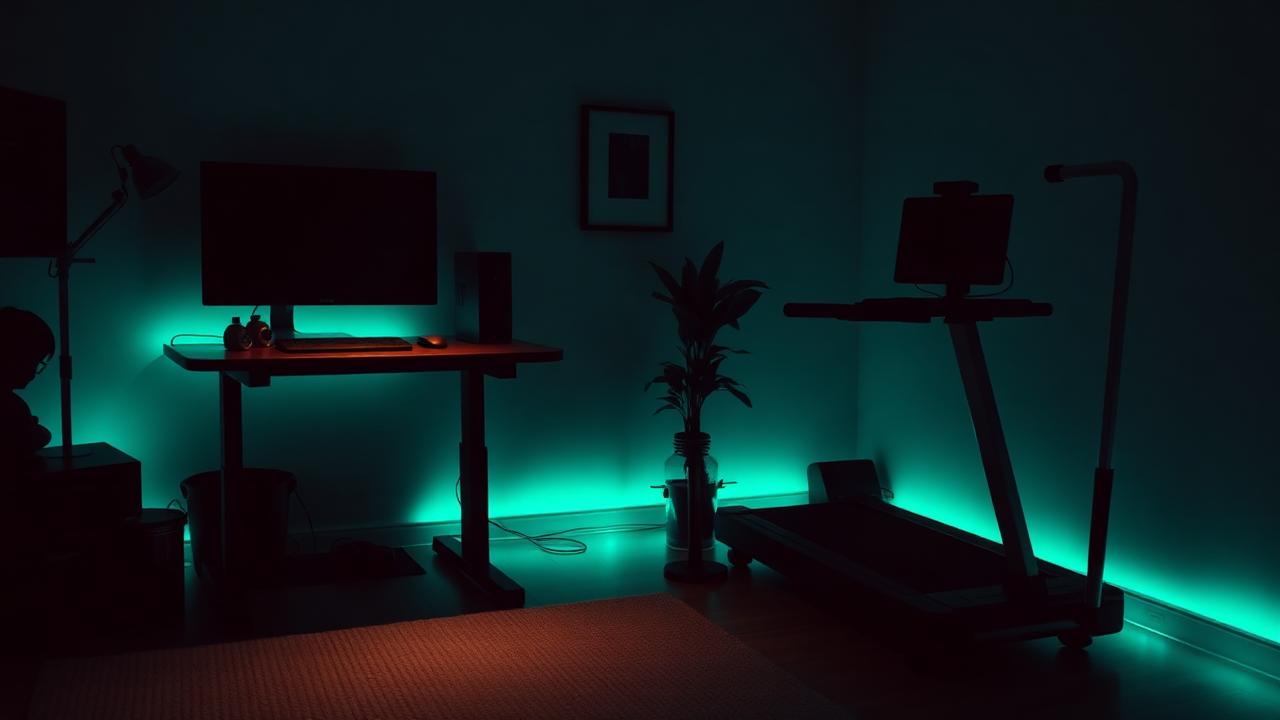
Standing desks and walking pads won't erase the damage of a sedentary job on their own. They're tools for switching tasks, not permanent workstations.
TL;DR
- Standing all day just swaps one set of joint stress for another — it's not a fix on its own.
- Walking pads burn real calories (~100–150 kcal/hour) but hurt fine motor control for typing and precise mouse use.
- Sit for deep coding and debugging, stand for PR reviews and Slack triage, walk during listen-only meetings.
- Aim for a rough 45 minutes sitting to 15 minutes standing or walking, per hour — variety is the actual goal.
Does standing or walking all day actually fix sitting damage?
No. Swapping eight hours of sitting for eight hours of static standing doesn't remove ergonomic strain — it just relocates it.
Standing still for long stretches increases lumbar lordosis (excess curve in your lower back), compresses the plantar fascia (the tissue band under your foot), and pools blood in your lower legs when your knees stay locked. Walking pads add movement, but the small vibrations make precise mouse input and heavy typing noticeably harder.
The evidence is strong that walking pads burn real energy — roughly 100–150 kcal/hour at slow speeds — and help with blood sugar control. The evidence that standing desks directly boost focus or code quality is weak.
Bottom line: standing desks change joint load, not your daily calorie burn. Walking pads change motor precision, not your overall fitness.
What actually works
Match your workstation to what the task demands:
- Sitting mode — deep coding and complex debugging. Use a chair with proper lumbar support when writing complex algorithms, chasing memory leaks, or doing heavy system design. High cognitive load needs physical stability, not movement.
- Standing mode — PR reviews and Slack triage. Raise the desk for routine code review, ticket grooming, or async messaging. Cap standing blocks at 20–30 minutes, and keep your knees slightly soft, not locked.
- Walking pad mode — listen-only meetings and reading docs. Walk at 1.0–1.5 mph during all-hands calls, architecture presentations, or reading technical docs. Don't try to speed-type above that pace — it's where accuracy falls apart.
Aim for roughly 45 minutes sitting to 15 minutes standing or walking each hour. Switching between postures is what prevents fatigue — not sticking rigidly to any single one.
Frequently Asked Questions
Direct, schedule-realistic answers for desk workers and engineers
Newsletter
One useful workout or gear pick per week.
Written for people who live at a desk. No spam, unsubscribe anytime.